

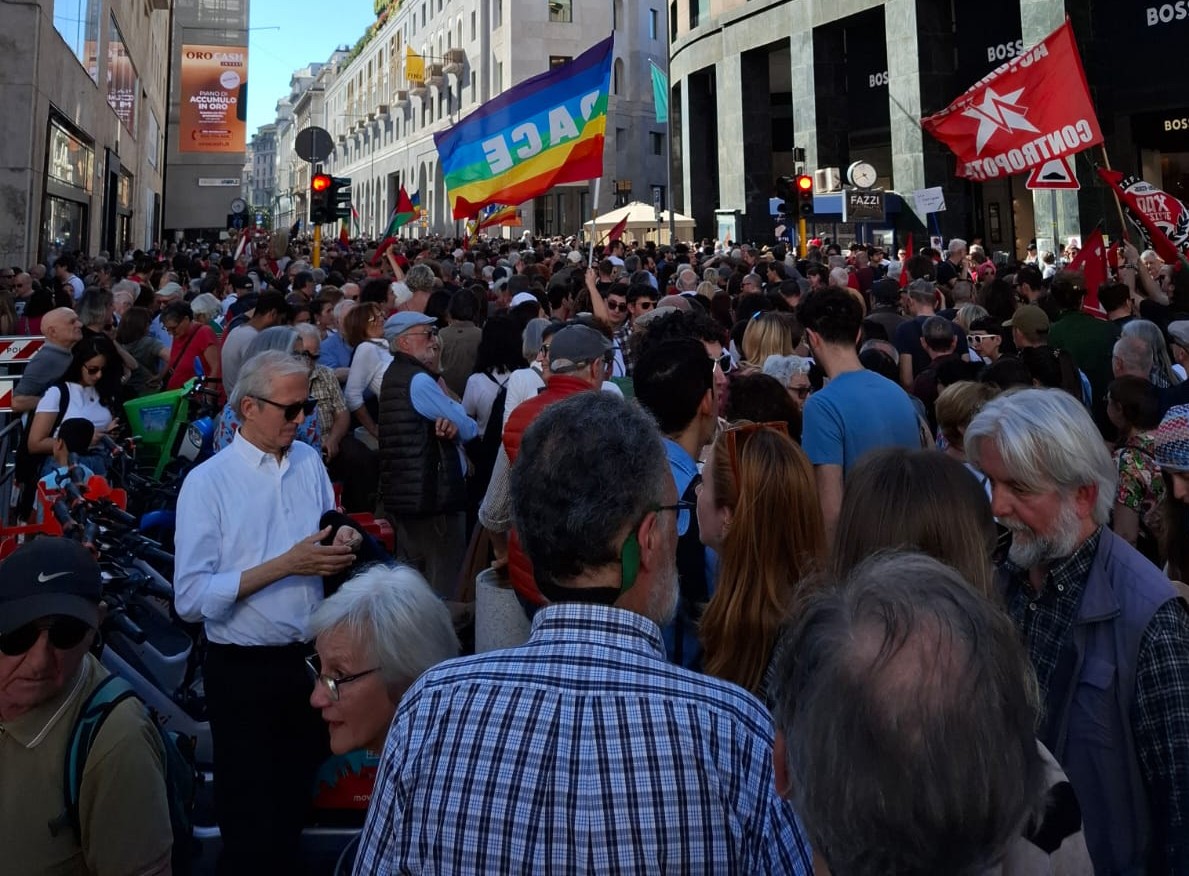
Every year on 1 May, Italy marks Primo Maggio – or Festa dei Lavoratori (Workers’ Day) – a date deeply rooted in international labour history.
Like elsewhere, its origins lie in the late 19th century struggles for fair wages, dignity at work, and above all the eight-hour day, first championed by workers in the United States and quickly embraced across Europe.
In Italy, Primo Maggio was first celebrated in the 1890s, becoming a powerful symbol of solidarity among workers, trade unions, and socialist movements. Under Benito Mussolini, however, the day was suppressed and replaced with celebrations aligned to the regime.
It was only after the fall of fascism and the end of the World War II that Festa dei Lavoratori was restored in 1945, reclaiming its place as a national day of mobilisation, reflection, and collective action.
Unlike in Northern Ireland, Primo Maggio in Italy is a public holiday – most people do not go to work, allowing space for participation in demonstrations and community events.
This reinforces the idea that workers’ rights are not only something to be defended, but something to be collectively recognised and celebrated.
Today, Primo Maggio is both a celebration and a reminder.
Trade unions such as CGIL, CISL, and UIL play a central role, organising marches, rallies, and campaigns focused on workers’ rights, precarious employment, and social justice.
Alongside these national mobilisations, local traditions also play an important role.
In my hometown of Milan, up to 10,000 people usually take part in the “May Day Parade”, a demonstration organised by centri sociali (grassroots social centres) and wider social movements in the city.
It is a great moment of reflection and celebration, with floats and live music bringing people together in the streets.
One of the most visible expressions of this is the Concertone del Primo Maggio in Rome – a free, all-day music festival held in Piazza San Giovanni in Laterano.
Organised by the three largest unions since 1990, the concert brings together major Italian and international artists, alongside speeches and messages highlighting the issues facing workers today. Over 300,000 attend the live event, which is the biggest of its kind in Europe.
In the past, artists like Lou Reed, Nick Cave and the Bad Seeds, Radiohead, Skunk and Oasis were among the lineup, along with celebrated Italian artists such as Carmen Consoli, Ligabue, Franco Battiato and many more.
It is also broadcast live on national television, reaching millions and becoming a cultural as well as political moment.
The Concertone reflects a distinctly Italian approach: combining activism with culture, protest with celebration. Yet its message remains firmly rooted in the core values of Festa dei Lavoratori – solidarity, dignity, and the ongoing struggle for fair and secure work.
Claudia Belloni – Volunteer Coordinator, ESOL Programme
Picture: Milan